Can Someone Really Hack Your Car?
From keyless car theft to remote takeovers, discover how hackers exploit modern vehicles and what drivers can do to stay safe.


Modern cars are more connected than ever. They can sync with your smartphone, unlock without a key, receive software updates over the air, and even park and drive themselves (with some limitations). But all that technology raises an unsettling question: could someone exploit your car’s digital systems to steal it, access your personal information, or interfere with the way it drives?
The answer is yes—researchers have demonstrated that certain vehicles can be vulnerable to cyberattacks. But that doesn’t mean hackers can take control of any car at the push of a button. The risks depend on the vehicle, its software, and the security measures in place. Here’s how car hacking works, what’s actually possible, and what drivers can do to protect themselves.
Your Car Is Now A Computer On Wheels
Modern vehicles rely on networks of electronic control units (ECUs) to manage everything from the engine and transmission to the brakes, airbags, and infotainment system. These computers communicate with one another, allowing different parts of the car to work together.
Connectivity adds another layer. Bluetooth, Wi-Fi, cellular connections, smartphone apps, and keyless-entry systems can create potential entry points for attackers looking for software vulnerabilities. A weakness in one connected feature could, in some circumstances, provide a route toward other vehicle systems.
Automakers use security measures to restrict access and isolate critical functions, but those protections vary by make, model, and year. Just like smartphones and computers, vehicles can contain software flaws that need to be identified and fixed.
Researchers Have Already Hacked Real Cars

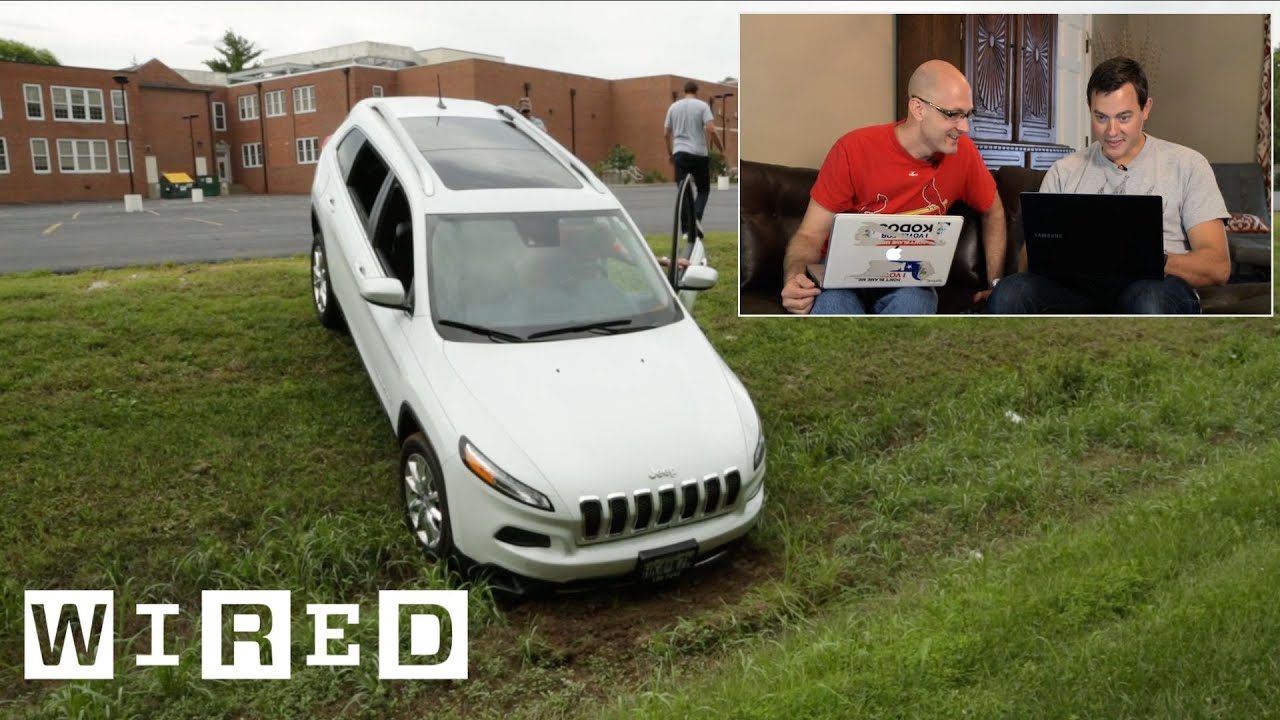
Car hacking is not just science fiction. In 2015, cybersecurity researchers Charlie Miller and Chris Valasek teamed up with a WIRED reporter to demonstrate that they could remotely interfere with certain functions of a Jeep Cherokee by exploiting a vulnerability associated with its connected entertainment system (see video above).
During a controlled demonstration, the researchers manipulated features including the air conditioning and radio. They also demonstrated the ability to affect more critical driving functions under specific conditions. The research attracted widespread attention and contributed to a recall involving approximately 1.4 million vehicles.
The incident was a wake-up call for the automotive industry. It showed that a vulnerability in a system designed for connectivity and entertainment could potentially have consequences beyond the dashboard. However, it did not mean every Jeep—or every modern vehicle—could be hacked in the same way. The attack depended on specific vulnerabilities that manufacturers could address.
How Do Hackers Get Into A Car?
There are several potential ways to target a vehicle, and the method matters. Some attacks aim to steal a car, while others seek personal data or exploit weaknesses in its electronic systems. Not every method provides access to driving controls.
- Keyless-entry attacks: Certain vehicles can be vulnerable to signal-relay techniques that trick the car into detecting a nearby key fob, potentially allowing unauthorized entry or starting.
- Connected apps and accounts: Weak passwords, compromised accounts, or flaws in a manufacturer’s online services can expose remote features or personal information.
- Infotainment vulnerabilities: Bugs in connected entertainment systems or wireless interfaces may give attackers an entry point into a vehicle’s electronics.
- Diagnostic ports: Someone with physical access may attempt to use a vehicle’s diagnostic connection to interact with its electronic systems, depending on the protections in place.
- Software flaws: Vulnerabilities in vehicle software can sometimes be exploited until the manufacturer releases a fix or implements other safeguards.
These methods have different requirements and consequences. Unlocking a door is not the same as controlling a moving vehicle, and an attack that works on one model may not work on another.
Could Someone Take Control Of Your Car While You Drive?
This is the scenario that sounds most alarming, and researchers have shown that it can be possible under particular circumstances. But remotely controlling a moving vehicle is not a simple trick that works on any car.
An attacker would generally need a vulnerability that affects the specific vehicle, a way to reach the relevant systems, and a path around the car’s security protections. Even then, the functions that could be affected depend on the vehicle’s architecture and the nature of the vulnerability.
Automakers increasingly use network separation, access controls, secure software development, and other defenses to prevent less-critical systems from communicating freely with safety-critical components. These measures help reduce risk, although they cannot guarantee that every vulnerability will be prevented.
For most drivers, more familiar threats—including vehicle theft, account compromise, and scams targeting personal information—are more practical concerns than a sophisticated remote takeover. Still, the potential safety consequences of car hacking make cybersecurity an important part of vehicle design and maintenance, as highlighted in a 2019 hearing before the U.S. Senate's Committee on Commerce, Science, and Transportation.
What Drivers Say About Car Hacking
Reddit users often focus on a practical concern: can someone steal a car without having its keys? In this r/cars discussion about push-button-start vehicles, commenters discuss keyless-entry vulnerabilities and relay attacks, which can trick a vehicle into detecting a key fob that is not actually nearby.
Real-world theft concerns also come up in this r/CarTalkUK thread, where a driver describes suspected thieves targeting their car. The discussion touches on possible relay attacks and precautions owners can take, including checking whether keyless entry can be disabled and considering additional physical security.
Meanwhile, this r/electricvehicles discussion about Hyundai Ioniq 5 theft concerns highlights questions about vehicle security and wireless technology. These discussions reflect a broader concern among drivers. As cars become more connected, understanding their vulnerabilities and following manufacturers’ security advice is increasingly important.
How to Protect Your Car From Hackers
You don’t need advanced technical knowledge to improve your vehicle’s security. A few basic precautions can help reduce common risks. Keep your car’s software updated and address manufacturer recalls promptly, since updates may fix security vulnerabilities as well as ordinary bugs.
Use a strong, unique password for any connected-car account, and enable multifactor authentication if it’s available. Review who has access to your vehicle’s mobile app and remove old or unfamiliar users. If your car uses keyless entry, check the manufacturer’s advice on relay-attack protection. Depending on the system, storing the key fob away from exterior doors and windows or using a suitable signal-blocking pouch may help.
Avoid connecting unknown devices to your car or allowing untrusted people to access its diagnostic port. Finally, don’t assume that every electronic glitch means your car has been hacked. Faulty sensors, electrical problems, and software bugs can cause similar symptoms. If you notice unusual behavior or suspect unauthorized access, contact your vehicle manufacturer or a qualified technician.
While cars can be hacked, that doesn’t mean yours is automatically at risk of being remotely hijacked. Real vulnerabilities have been documented, and the automotive industry continues to improve its defenses. That said, staying vigilant is always a good idea.
More From Motor101
RECOMMENDED FOR YOU

F1's Weirdest Race Car Had A Giant Fan On The Back
Automakers Are Getting Rid Of Dipsticks. Mechanic Warns It’s Creating ‘The New Automotive Scam Of The Next 10 Years’
The Difference Between Wet And Dry DCTs Goes Beyond Cooling
GM Allegedly Sold Your Driving Data. Now The Company Must Pay $220 Million
Who Actually Invented The Drive-Thru? It's Complicated
McLaren's Next Supercar Officially Has A Name: McL 820
Are Hybrids Actually Less Reliable? The Answer Isn't So Simple