The Difference Between Wet And Dry DCTs Goes Beyond Cooling
Dry and wet DCTs both deliver quick gear changes, but their differences in cooling, efficiency, and durability can affect everyday driving.
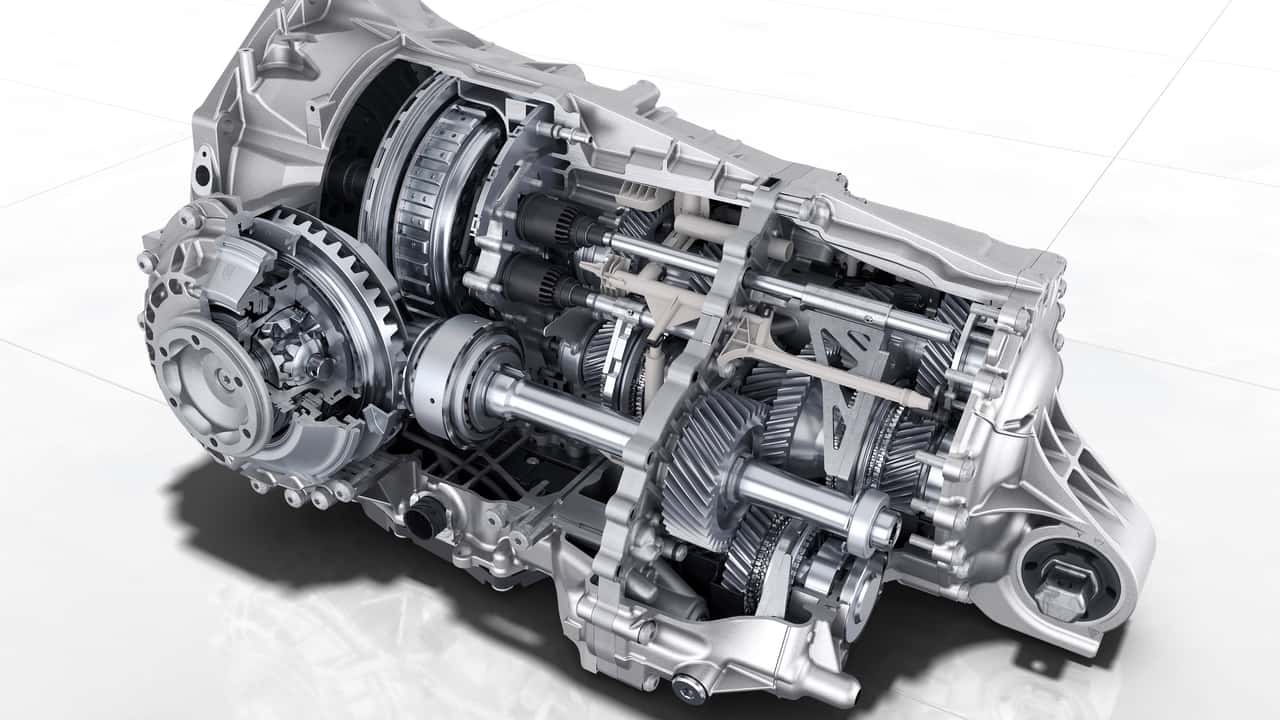

Dual-clutch transmissions (DCTs) have become increasingly popular in modern cars, offering quick gear changes, impressive efficiency, and the convenience of an automatic without completely abandoning the mechanical principles of a manual gearbox. However, not all DCTs are created equal.
Some use dry clutches, while others rely on wet clutch packs, and the difference can have a significant impact on how a car drives, how much power its transmission can handle, and how it manages heat. Both designs have advantages and disadvantages, and automakers choose between them based on factors such as engine torque, fuel economy, packaging, and expected driving conditions.
What Is A Dual-Clutch Transmission?
Before getting into the differences between dry and wet clutches, it helps to understand how a dual-clutch transmission actually works. As its name suggests, a DCT uses two separate clutches instead of the single clutch found in a traditional manual transmission.
One clutch handles the odd-numbered gears, while the other takes care of the even-numbered gears. This arrangement allows the transmission to prepare the next gear before the driver needs it. When a shift is requested, one clutch disengages while the other engages, allowing power delivery to continue with very little interruption.
Unlike a conventional automatic transmission that typically uses a torque converter, a DCT relies on clutch engagement to transfer engine power to the gearbox. The entire process is controlled electronically, so drivers don't need to operate a clutch pedal or manually select every gear.
The result is a transmission that combines much of the convenience of an automatic with the direct mechanical connection and quick shifts associated with a manual gearbox.
What Is A Dry-Clutch DCT?
A dry-clutch DCT uses friction clutches that operate without being immersed in transmission oil. The basic design is similar to the clutch found in a conventional manual car, although a DCT uses two clutches and an automated mechanism to control their engagement.
Because there's no oil circulating around the clutch plates, the system doesn't need a dedicated clutch-cooling flow. This reduces mechanical complexity, weight, and energy losses associated with pumping and moving transmission fluid.
Dry-clutch DCTs are generally suited to smaller engines and applications that don't require extremely high torque capacity. Their relatively lightweight construction and efficiency make them attractive for compact cars and other vehicles where fuel economy is a priority.
However, there's a trade-off. Without oil to carry away heat, dry clutches rely on air and surrounding components to dissipate the heat generated during engagement. Repeated slipping, particularly in heavy traffic or during prolonged low-speed maneuvering, can increase clutch temperatures and accelerate wear.
That's why some dry-clutch DCTs can feel less comfortable during stop-and-go driving than conventional automatic transmissions.
What Is A Wet-Clutch DCT?
A wet-clutch DCT uses clutch plates that operate in transmission oil. The fluid helps lubricate the components and, more importantly, carries heat away from the clutch assembly during operation.
This cooling capability allows wet-clutch systems to handle greater torque and more demanding operating conditions. They're therefore commonly found in higher-powered vehicles, performance cars, and applications where the transmission is expected to deal with substantial engine output.
The oil also helps manage heat during repeated clutch engagement, making wet-clutch DCTs better suited to situations involving frequent shifts and higher thermal loads.
However, this additional cooling comes with some disadvantages. Wet-clutch systems require an oil supply, additional components, and often dedicated cooling and pumping arrangements. Moving oil through the system also creates parasitic energy losses, potentially reducing efficiency compared with a comparable dry-clutch design.
Wet-clutch transmissions can also have more demanding fluid maintenance requirements, depending on the manufacturer's design and service schedule.
Dry Vs. Wet Clutch DCT: What's The Difference?


Although both systems use the same basic dual-clutch principle, their construction makes them better suited to different applications. Here are the main differences:
- Cooling: Dry clutches dissipate heat through air and surrounding components, while wet clutches use circulating oil to remove heat.
- Torque capacity: Wet-clutch DCTs generally handle higher torque because their cooling systems can manage greater thermal loads.
- Efficiency: Dry-clutch systems typically have lower parasitic losses because they don't need to circulate oil around the clutch packs.
- Weight and complexity: Dry-clutch designs are generally lighter and mechanically simpler, while wet-clutch systems require additional fluid management components.
- Driving conditions: Wet-clutch DCTs are generally better suited to repeated high-load operation, while dry-clutch systems can be more sensitive to prolonged slipping in stop-and-go traffic.
- Maintenance: Wet-clutch systems typically require specific transmission-fluid servicing, while dry-clutch systems still need gearbox lubrication but don't require oil for the clutch itself.
Neither design is universally better. A dry-clutch DCT can be an excellent choice for a relatively small, efficient car, while a wet-clutch DCT makes more sense when higher torque capacity and improved heat management are priorities. For an in-depth look at this topic, check out Schaeffler's technical guide.
Owners Share Their Experiences With Dry And Wet DCTs
Reddit discussions about dual-clutch transmissions reveal that reliability and driving conditions are among owners' biggest concerns. In an r/Hyundai discussion, prospective buyers debated whether Hyundai's dry-clutch DCT was worth choosing over a traditional automatic. Several commenters raised concerns about overheating and jerky behavior in stop-and-go traffic, while others pointed out that driving habits make a difference.
The conversation is similar in r/CarsAustralia, where owners discussed the heat-management limitations of dry clutches and why wet-clutch systems can be better suited to demanding conditions. Meanwhile, an r/Veloster discussion highlighted reports of hesitation when accelerating from a stop in a dry-clutch model, prompting comparisons with the wet-clutch version.
Taken together, these discussions suggest that understanding how a DCT operates and adapting driving habits can be just as important as whether the system uses wet or dry clutches.
Which DCT Is Better And Which One Should You Choose?
If you're shopping for a car equipped with a dual-clutch transmission, it's worth understanding which type you're getting. The distinction can influence everything from everyday driving comfort to long-term maintenance considerations.
A dry-clutch DCT makes plenty of sense in a lightweight vehicle with a modestly powered engine. Its lower mechanical losses and relatively simple construction can help improve fuel efficiency, making it a practical choice for everyday commuting.
A wet-clutch DCT, meanwhile, is generally the better option for vehicles that produce more torque or regularly operate under demanding conditions. Its improved cooling capabilities provide an advantage when the transmission has to deal with repeated shifts and higher thermal loads.
That doesn't automatically mean every wet-clutch DCT will be more reliable than every dry-clutch unit. Transmission durability depends on the specific design, software calibration, driving habits, maintenance, and how the vehicle is used. Ultimately, both technologies have their place in the automotive world. Dry-clutch DCTs prioritize efficiency and simplicity, while wet-clutch DCTs emphasize cooling capacity and the ability to handle greater loads.
More From Motor101
RECOMMENDED FOR YOU

Who Actually Invented The Drive-Thru? It's Complicated
Honda Never Wanted The Ridgeline To Be A Traditional Pickup, Says Designer
Are Hybrids Actually Less Reliable? The Answer Isn't So Simple
I Drove The Chinese Cars That Could Come To America. Here's What Impressed Me
Those Fuzzy Dice Hanging In Cars Have WWII Origins
Classic Datsun 240Z Gets Twin-Turbo Power And Carbon Fiber Body
How A Tiny Ohio Town Became The Tire Capital Of The World