Expert Reveals The Real Reason You Might Want To Reconsider Using 87 Octane Gasoline At The Pump
“When you put ethanol in gasoline..."
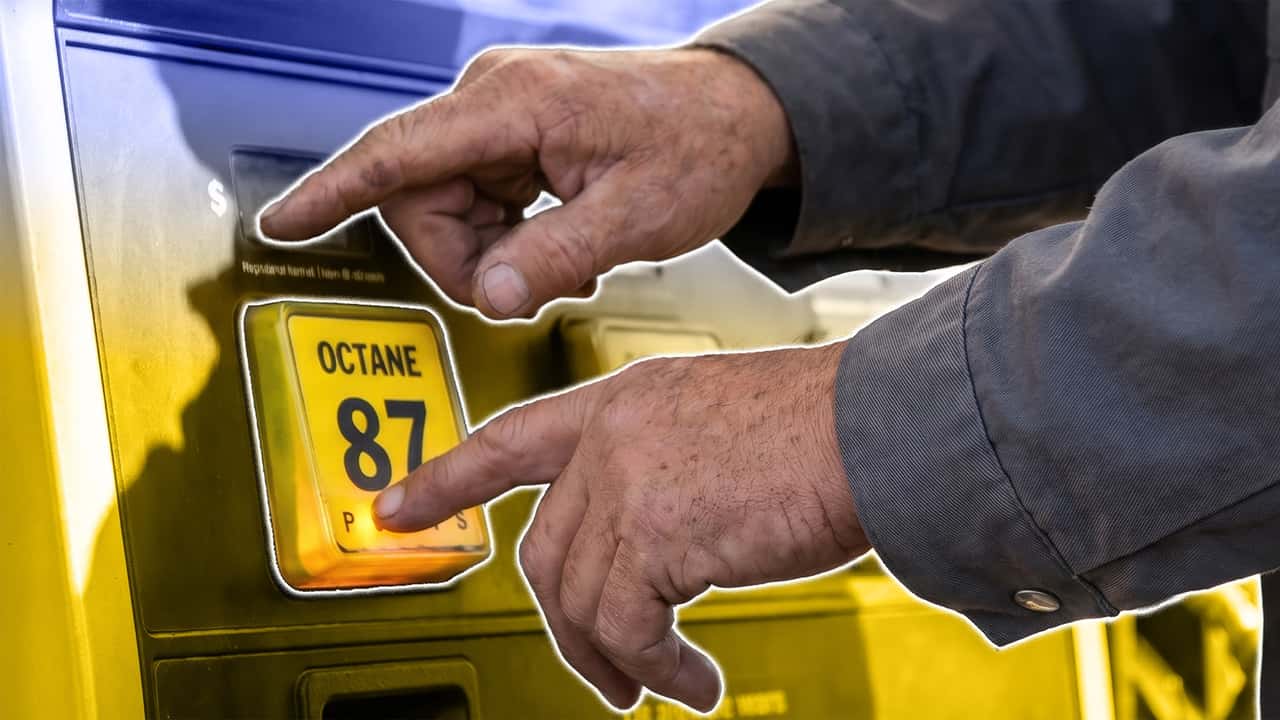

Unless you’re driving a luxury vehicle, you’re probably picking the cheapest gas every time you fill up. Gas is already expensive as it is; you likely don't want to make it an even bigger expense unless you have to.
In a video with more than 132,000 views, fuel hauler Blaine (@houseofblaine) shares a “gasoline fun fact” while he fills a gas station's underground fuel supply.
“When you fill up your car at the pump, you probably put in 87-octane regular gas,” Blaine says. “And you've probably seen it on the sticker on the pump. It says, ‘May contain up to 10% ethanol.’”
That sticker isn't just a tiny piece of legal fine print. Blaine explains that gasoline starts at an 84-octane base fuel with no ethanol mixed in. The terminal then blends that base with 10% ethanol, which increases the finished fuel's octane rating.
“When you put ethanol in gasoline, it raises the octane level from 84 to 87,” Blaine says.
Ethanol has a higher octane rating than the gasoline base, so adding it increases the octane of the final blend. The same idea applies to the 88-octane fuel offered at some stations. Blaine says those pumps may dispense gasoline blended with 15% ethanol instead of 10%.
“The more ethanol you put in, the higher the octane level,” he says.
What Is Octane And How Does It Work?
Octane tells you how much pressure gasoline can handle before it ignites. It is not a measure of how good or pure the gas is, HowStuffWorks explains.
An engine squeezes a mixture of gasoline and air inside its cylinders. The spark plug is supposed to ignite that mixture at a specific moment. But if the gasoline cannot handle the pressure, it may ignite before the spark plug fires. This creates engine knock.
A higher octane rating means the gas can withstand more pressure without igniting early. That is why some high-performance engines require higher-octane fuel.
Premium Vs. Regular Gas
Both premium and regular gas contain ethanol. The gasoline itself is what’s different, as premium is refined to have a higher octane rating. For this reason, some believe it’s better for vehicles.
Premium is not automatically better for every car, however. Regular gasoline is typically rated at 87 octane, midgrade falls between 88 and 90, and premium generally ranges from 91 to 94, Progressive reports.
Premium's added resistance to engine knock can benefit vehicles with turbocharged, high-compression or performance engines designed for it. But putting premium in a car built for regular gas generally will not improve its performance or fuel economy. It will mostly just make it cost more.
Ultimately, you have to go by what’s in the owner's manual. If the manufacturer requires premium, use it. If premium is only recommended, the vehicle can typically run on regular, although it may not deliver the same performance or fuel economy.
People Are Divided On Ethanol
Based on the comments, people have strong feelings about ethanol.
“More ethanol = less fuel economy,” a top comment read.
“I absolutely avoid anything with ethanol. Makes my engines knock,” a person said.
“There’s a gas station in my hometown that sells 91 octane ethanol free it’s awesome,” another wrote.
Motor1 reached out to Blaine via TikTok direct message and comment. We'll be sure to update this if he responds.
RECOMMENDED FOR YOU

GMC Driver Gets A Sensor Error On Her Yukon. Why Has It Taken Months To Fix?
Do Hybrid Engines Actually Wear Out Faster? The Answer Isn't Simple
Man Borrows Girlfriend’s Car. It Only Has 1 Mile In The Tank. She Says That Means It Has 15 Miles Left
2027 Jeep Compass Gets A Price Hike As Standard Features Improve
Expert Warns ‘Elder Millennials’ From Buying Kia Telluride. Is He Right?
Mercedes Boss Talks Electric E-Class, Developed From A 'White Sheet Of Paper'
Woman's Certified Pre-Owned Genesis GV70 Starts Pulling. Suddenly, There’s Fluid On The Floor