Aston Martin Delays Its First EV. CEO Says V8 And V12 Engines Will Run Through 2035
CEO Adrian Hallmark outlines a 2033 to 2035 window for Aston Martin’s first EV while planning compliant V8 and V12 engines through 2035.
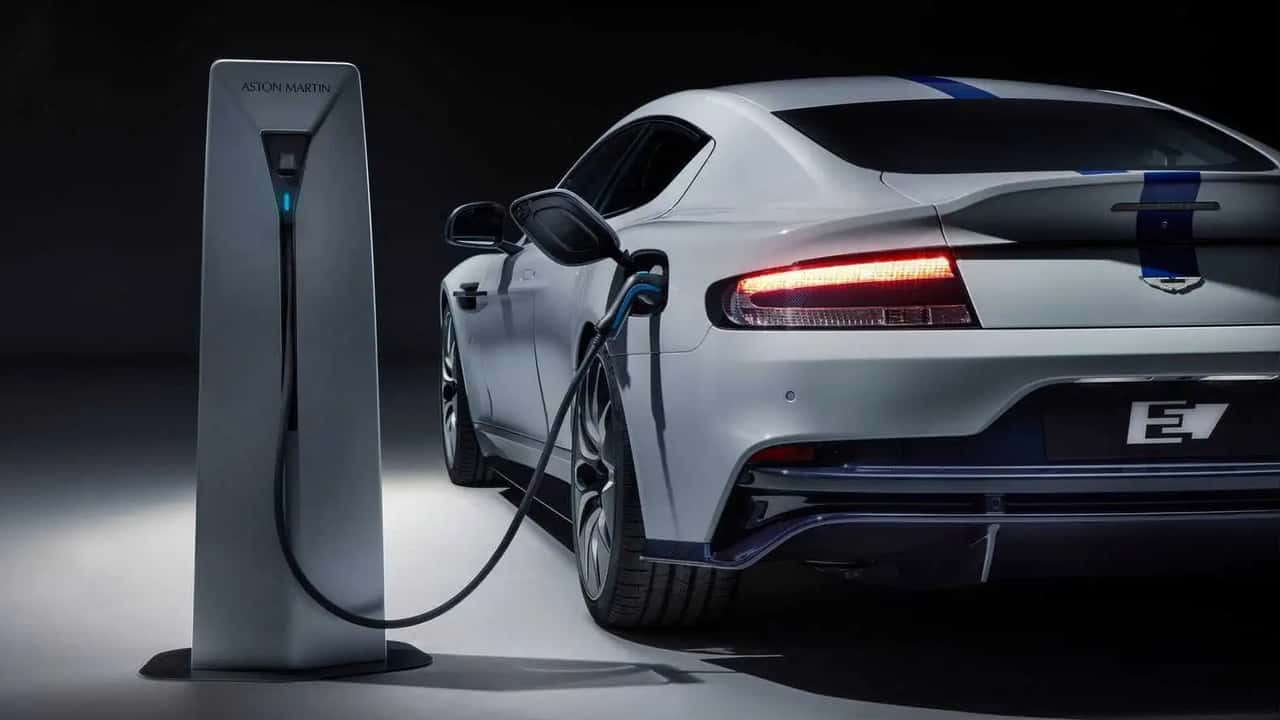

Aston Martin's first battery-electric vehicle will not arrive before 2033, and it might not land until 2035. CEO Adrian Hallmark laid out the window this week, pushing back a 2030 target he had proposed earlier in his tenure.
The delay does not touch the brand's combustion lineup. V8 and V12 engines stay in production through 2035, Hallmark said, even as the company keeps studying when and how to bring an electric model to market.
Aston Martin's First EV Slides To 2033 Or Later

Aston Martin EV Teaser Via Lucid Partnership Announcement
Hallmark declined to name an exact year. "I'm not going to give an absolute date, because it's imprecise. It could be 2035, it might be 2033, but it's in that three-year window. It's not 2031."
That's a significant retreat from where Aston Martin stood under previous management, when the company's first EV was targeted for 2027. Hallmark himself had suggested 2030 after joining from Bentley in September 2024, before pushing the window out again.
He described the company as a "BEV delayer," not a "BEV denier." The distinction is meant to separate a postponed launch from an abandoned one.
According to Autocar, the automaker is "stress-testing" scenarios for how electric power fits specific markets rather than committing to a single global rollout date.
Aston Martin has already lined up the hardware for whenever it does pull the trigger. A deal with Lucid gives it access to electric-vehicle technology, and Hallmark noted the slower timeline actually works in the company's favor. "We have the deal with Lucid, and the interesting thing is, because we delayed, by the time we activate that deal, the technology that we will get is totally different to what we signed up the original contract for."
V8 And V12 Engines Are Planned Through 2035
Aston Martin Vanquish V12
Hallmark said Aston Martin has a roadmap to keep both its larger and smaller combustion engines compliant through to 2035. That covers the V8s and V12s that currently sit under the hood of nearly everything the brand sells.
Hybridization is part of that roadmap, Hallmark said, though plug-in hybrid technology probably is not. A mild or standard hybrid system can support compliance without requiring the heavier battery packs and charging infrastructure a plug-in setup demands.
The company's engineering partnerships back up that combustion-first approach. Aston Martin uses Mercedes-AMG V8 engines and key electric and electronic architectures from Mercedes-Benz for several current models, while also developing its own next-generation sports-car platform and powertrains.
The new DBX GT, a $260,000 luxury SUV built around a twin-turbo V8, captured the same point from Hallmark directly. He expects combustion engines to remain dominant at Aston Martin until 2035.
Why Demand And Legislation Are Driving The Delay
2027 Aston Martin DBX GT
Hallmark pointed to a mix of factors behind the shifting timeline. Customer demand, battery and motor technology, regional markets, and legislation are all moving at once, and not always in the same direction.
He said Aston Martin wants more time to evaluate those variables before committing further EV investment.
Regulation sits at the center of it. In the European Union, CO2 rules move to a 100 percent reduction target for new car fleets in 2035 versus 2021 levels, with a path for low-volume combustion cars that run only on CO2-neutral e-fuels after that date. In the UK, the government plans to allow new hybrids until 2035 and then require all new cars and vans to be zero-emission at the tailpipe.
Hallmark treats that policy backdrop as a de facto end point for most of Aston Martin's combustion lineup. He told Autocar that the brand is a "BEV delayer, not a BEV denier" and outlined a roadmap to keep V8 and V12 engines legal until at least 2035, with a battery-electric line arriving closer to that point for compliance in key markets.
That's a stricter limit than building an electric car buyers actually want sooner. Aston Martin's current EV investment is described as low-level, focused on research and study rather than production tooling.
Hallmark summed up where that leaves the brand in cultural terms. "Aston now feels like a normal company." For now, that normal includes V8s, V12s, and an electric car that is still several years out.
More On EV Backlash:
Source: Autocar
RECOMMENDED FOR YOU
Aston Martin's New Valhalla Spider Can Hit 217 MPH With The Roof Down
2027 Jeep Compass Gets A Price Hike As Standard Features Improve
You Might Finally Be Able To Afford An Aston Martin Vanquish
Mercedes Boss Talks Electric E-Class, Developed From A 'White Sheet Of Paper'
The 15 Best Movie Cars of All Time, Ranked
Karma Teases A Winged, Track-Ready Coupe For Halloween Reveal In Las Vegas
Remember Aston Martin's Weird Little City Car? There's A Reason It Existed