Mechanic Works On Toyota. Then He Realizes The Owner Almost Got Ripped Off: 'Bad TXV Valve'
"Customer took it to another shop..."


Your car’s air conditioning going out at an inopportune time feels like a personal affront. You’re counting on that cool air to drop your core temperature a few degrees. But instead it’s cold one minute and hot the next.
Although the mercury’s dropping in much of the country, plenty of people are in climates where no A/C means driving around in your own pooling sweat well after the autumnal equinox.
But did you know that your A/C woes can actually be your fault? That’s what one mechanic recently revealed, and which bad habit can turn that cool breeze into a desert wind.
Mechanic Disputes A/C Diagnosis
In a TikTok with more than 18,000 views, mechanic Dave Perry (@daveperry1976) examined a 2016 Toyota Tundra that the owner had previously taken to another shop.
Perry explains that the truck's air conditioner is unreliable.
“A/C blows sometimes cold, and then all of a sudden it goes [expletive] hot,” he says.
He connects pressure gauges to the system and says the readings show approximately 150 on the high-pressure side and negative 10 on the low-pressure side. That negative reading immediately catches his attention.
“The compressor doesn't always go bad, man,” he says. “First thing you pay attention to is that low side was a negative.”
In his assessment, the low side pulling into a vacuum points toward a restriction somewhere in the system. It also suggests that the compressor is still moving refrigerant rather than simply doing nothing.
“What the [expletive] does that mean?” he asks, then explains, “It means you've got a clog or you've got something. It also means that the compressor is doing something.”
Because this Tundra uses a TXV valve, he suspects the component is restricted, saying the compressor is trying to circulate refrigerant, but the restriction is preventing the low side from getting the correct amount.
“More than likely, that side is completely slammed shut,” he says. “The compressor is trying to pump. It's giving it a negative, and you got a bad TXV valve.”
Folks at the other shop told Perry’s customer his Toyota needed a condenser and at least one additional component. But Perry said that’s not what the readings point to, adding that shops often recommend compressors or complete A/C kits when a smaller component may be responsible.
Though he doesn’t entirely blame the other mechanics.
“A/C is hard. A/C wasn't [expletive] easy for me,” he says. “I took A/C four [expletive] times before I passed that [expletive] test.”
But after years of working on these systems, identifying the real problem has become almost like second nature.
His message to other technicians is simple: Learn how the system works before charging people for fixes their vehicle may not need.
“Your customers will actually thank you for that,” he says.
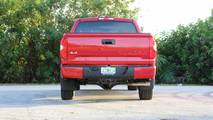
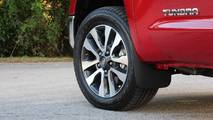
Gallery: 2018 Toyota Tundra Limited CrewMax: Review





What Is A TXV? And Why Does It Matter?
TXV stands for thermal expansion valve. It’s responsible for controlling how much refrigerant enters the evaporator where the air conditioning system absorbs heat from the cabin, StayKool explains.
It adds that a sensing bulb monitors the temperature of the refrigerant leaving the evaporator. That information moves a diaphragm inside the valve, which opens or closes a needle to adjust the flow.
When the evaporator needs more cooling, the valve lets more refrigerant through. When it is cold enough, the valve restricts the flow. That constant adjustment helps the system maintain the right pressure and temperature instead of dumping the same amount of refrigerant through at all times.
That balance also protects some more expensive parts. Classic Auto Air says too much refrigerant can force the compressor to work harder, while too little can leave the system struggling to cool the cabin.
How Can You Tell A TXV Is Failing?
Here are a few things StayKool says drivers may notice if the TXV is failing:
- Warm or inconsistent air: A valve stuck closed or partially blocked may keep enough refrigerant from reaching the evaporator. The vents may blow warm air or alternate unpredictably between hot and cold.
- Frost or ice: A valve stuck open can flood the evaporator with refrigerant, allowing ice to form and potentially reducing airflow.
- A compressor that keeps running: Abnormal pressure inside the system may leave the compressor working constantly as it tries to compensate.
- Hissing or whistling: Refrigerant being forced through a restricted opening can create unusual noises.
- Abnormal pressure readings: The high- and low-pressure sides may show readings that do not respond as expected during testing.
The Expansion Valve Debate
Some commenters didn’t think Perry’s diagnosis was entirely correct—though they seem to have their terminology confused.
“It’s not a T Xb valve. It’s an expansion valve, my dude,” one wrote.
Another chimed in, “Blocked condenser or exp valve.”
To one of his detractors blaming an expansion valve, Perry retorted, “TXV is a thermal expansion valve.”
Several agreed he had it right, though.
“Think of the TXV like a fuel injector. If you're negative on the low side, then it's a question of is the TXV opening or is it clogged with pag oil or a dryer broke loose and clogged it,” said one.
Motor1 reached out to Perry via TikTok direct message and comment. We'll be sure to update this if he responds.
Warning: The video below contains explicit language
RECOMMENDED FOR YOU
Toyota Put Snow Tracks On Five Of Its Trucks and SUVs. Because Why Not?
Mazda Is Quietly Killing One Of Its Most Unusual Engines
Toyota Tech Works On Car With Extended Warranty. Then The Warranty Company Says It’ll Only Cover A Quarter Of The Cost
Are Hybrids Actually Less Reliable? The Answer Isn't So Simple
Toyota Pairs New Platform With Next-Gen Hybrid Built Around All-New Gas Engine
2027 Jeep Compass Gets A Price Hike As Standard Features Improve
Toyota Recalls 228,000 Sienna Vans Over Seat Backs That May Unlock In A Crash