Toyota Says What Everyone Thinks: Mild-Hybrids Aren't Really Hybrids
Yet it advertises some cars that use 48-volt tech as hybrids.

For many decades, choosing a powertrain for your next car was simple. You had to pick between gasoline and diesel engines, and that was largely it. In the last couple of decades, however, as technology has advanced and emissions regulations have tightened, buyers have been flooded with acronyms that make the process confusing: MHEV, HEV, PHEV, EV/BEV, REEV, and FCEV. If you’re a car enthusiast, you probably know what those letters mean. But most people don’t live and breathe cars like you or me.
This rich variety of hybrid systems adds to the confusion, and the world’s largest automaker wants to make sure it isn’t misleading its customers. Vice President of Sales and Marketing at Toyota Australia, Sean Hanley, told Drive magazine that the company doesn’t consider vehicles using mild-hybrid technology (MHEV) to be true hybrids.
‘A 48-volt-assisted system, in our opinion, does not represent hybrid drive. We don’t count 48-volt as a HEV [hybrid electric vehicle], just to put it on the record. They’re not hybrids, not remotely, so we definitely want to separate these three conditions on this technology.’
The Toyota official believes it’s up to automakers to make the terminology crystal clear so that people understand what they’re actually buying: “I think OEMs have a responsibility to make sure.”

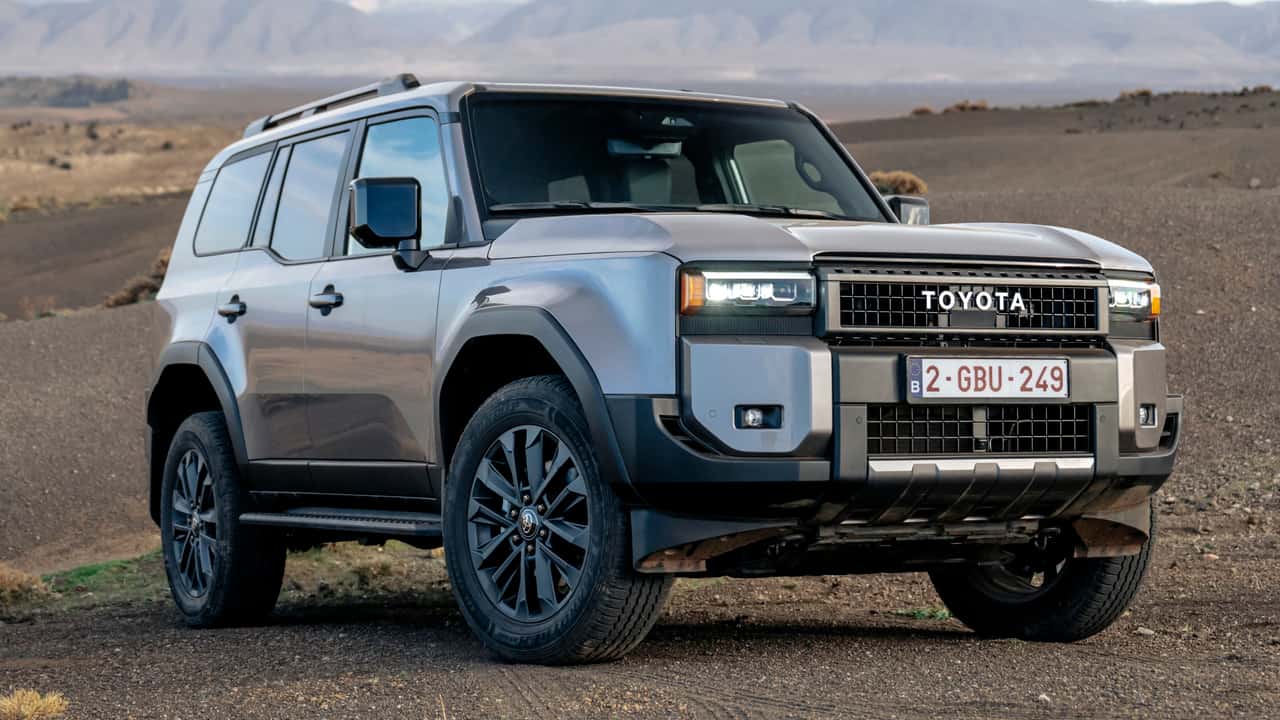
However, the irony is that Toyota associates 48-volt cars with hybrids in some markets. For example, the Land Cruiser Hybrid 48V and Hilux Hybrid 48V were introduced just a few months ago in Europe. Both the SUV and the pickup truck are described as having an “electrified powertrain” featuring an electric motor-generator that replaces the conventional alternator.
What Is A Mild-Hybrid Anyway?
The combustion engine powers the motor-generator, which in turn recharges the lithium-ion battery. There’s also a DC-DC converter to manage energy flow between the battery and motor. While a mild-hybrid setup smooths out the start-stop operation and makes it quieter, it usually can’t propel the vehicle solely on electric power.
So why do mild-hybrids exist? Because, at least on paper, they deliver modest efficiency gains at minimal cost and weight. A 48-volt system can’t match the fuel economy of a proper series-parallel hybrid (HEV), let alone a plug-in hybrid (PHEV), but as emissions regulations tighten, it’s an affordable way to help reduce CO₂ levels. In the case of the Hilux, fuel consumption and emissions are cut by five percent.
Advantages Of A Mild-Hybrid
Toyota also claims that acceleration from a standstill and deceleration are more linear compared to a conventional ICE car. In addition, waste is further minimized by the regeneration function, which recovers energy that would otherwise be lost when the driver lifts their foot off the accelerator. The stored energy is then used to power the engine’s stop-start function and assist during acceleration.
Toyota offers a wide range of hybrid flavors, along with fully electric vehicles (BEV/EV) powered by either batteries or hydrogen fuel cells (FCEV). The company is also developing a new family of gasoline engines compatible with “any type of application,” according to a recent statement by Toyota Europe Vice President of Product Strategy and Marketing, Andrea Carlucci. Reading between the lines, this new engine could be used as a generator to charge a battery in range-extending electric vehicles (REEV), allowing Toyota to cover nearly every powertrain category.
Toyota's Fun Hybrids:

Source: Drive
RECOMMENDED FOR YOU
Toyota Pairs New Platform With Next-Gen Hybrid Built Around All-New Gas Engine
A Used Porsche Cayenne Is A Lot Of SUV For The Money: Why Buy?
Toyota Recalls 228,000 Sienna Vans Over Seat Backs That May Unlock In A Crash
Mazda Is Quietly Killing One Of Its Most Unusual Engines
The Toyota Crown Signia Finally Embraces The Wagon Look For SEMA
Are Hybrids Actually Less Reliable? The Answer Isn't So Simple
Toyota Wants To Cash In Billions By Selling Its New Gas Engines To Other Companies