Hyundai Might Ditch Buttons for a Massive Tesla-Style Screen. That's a Mistake
The automaker’s new Pleos Connect system debuts in 2026, and most functions are baked into one massive screen.
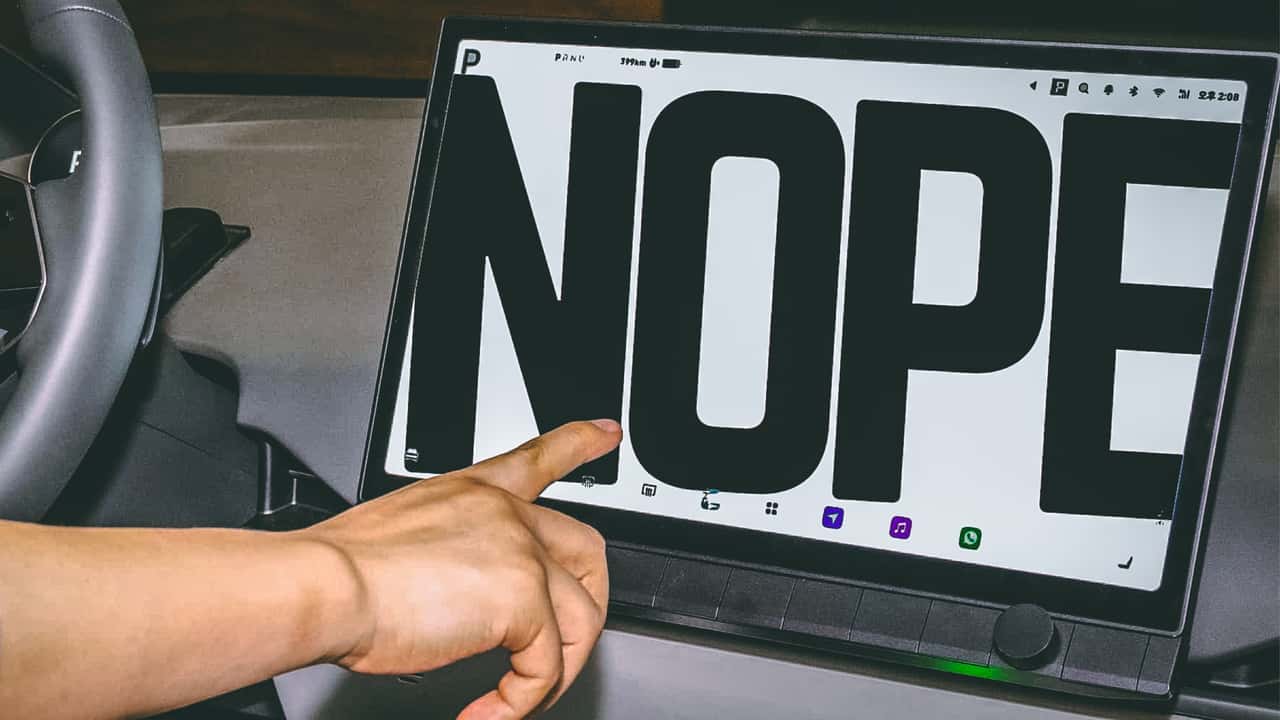

Hyundai is moving in a dramatic new direction with its infotainment system. Dubbed Pleos Connect, the automaker's upcoming user interface combines the infotainment system, vehicle operating system, and an application development platform into one seamless package.
Pleos Connect is scheduled to launch in 2026, and according to Korea's ET News, the first two vehicles to receive the updated system will be the European i30 (the next-generation Elantra in the US) and the next-generation Tucson SUV. Hyundai hopes to have the technology in more than 20 million cars by the end of the decade.

Pleos Connect Prototype
The technology sounds revolutionary—and much of it is. But as we've seen so many times before, this could mean bad news for fans of buttons.
Even though Hyundai is adamant that it will keep buttons in its vehicles, Pleos Connect's so-called "Tesla-style" screen has us skeptical. As previewed by the concept from back in April, the sizable display controls nearly all in-vehicle functions and takes up a significant portion of the dashboard. Only volume and tuning knobs are visible in early prototypes.
Said to mimic a modern smartphone, Pleos Connect will allow for multi-window functions and multiple apps running simultaneously on the same screen. It will also have a built-in Gleo AI system that can accurately recognize voice commands and perform functions more complex than Hyundai's current voice command system.
Some buttons will likely move to the steering wheel, while other functions will undoubtedly make their way onto the screen. That said, where other automakers have started ditching the instrument cluster entirely, Hyundai promises to keep that feature intact in cars with Pleos Connect.
As mentioned, the first Pleos-equipped cars will hit the road sometime in 2026, and we can expect the technology to make its way to the US in the following years. We should have a better idea of exactly how Hyundai plans to use the technology by then.
Bring Back Buttons
RECOMMENDED FOR YOU
The New Hyundai Tucson Could Be Its Most Popular Yet
Mazda Is Quietly Killing One Of Its Most Unusual Engines
‘This Should Be On The Dealership’: Woman Buys VW at Hyundai Dealership. Then Her Mechanic Finds A Shocking Problem No One Caught
Do Hybrid Engines Actually Wear Out Faster? The Answer Isn't Simple
Hyundai Recalls 94,000 Genesis Models Over Power Seat Fire Risk
2027 Jeep Compass Gets A Price Hike As Standard Features Improve
Hyundai Dealership Worker Shows Off Palisade. But It Has A 'Car Birthday'—That's Good For Shoppers